I’m very lazy.
As opening statements go, saying, ‘I’m very lazy’ is probably surprising given this teaching blog aims to be a record of – for want of a better way of saying it – the stuff I do to promote my own professional development. So how can you be lazy and productive at the same time? Dear reader, don’t dismay, continue reading; I’m coming at this from a good place- but please let me be as clear as I can so there is no interpretation:
I strive to be as disgracefully idle as I possibly can be*.
I haven’t always been of this disposition. When degrees of complication or layers were added to my workload, I would often retort, ‘I’m a very lazy man!’** This was usually followed by a polite smirk. Not just a teacher but a comedian, as well! Ha! Ha!, what humour, eh?
A throwaway comment which could be deployed at any opportune moment. It wasn’t in isolation either. I had a repertoire of witty ripostes for other situations but the line, I’m a very lazy man, don’t you know?… seemed to raise eyebrows and the occasional titter. But I wasn’t purposefully trying to be a contrarian and there wasn’t a lazy bone in my body. So why say it? I was not on the road to perdition, nor am I now, but a critical juncture in my work made me reevaluate everything when I realised indolence is a guiding light to success and happiness. Laziness is a virtue and something we should all be working to achieve. I’m a convert to laziness.
The impetus for this came from a student I taught in Poland who worked in the pharmaceutical industry. He was tasked with looking at how to make operating theatres in a hospital more productive, especially as there was a backlog of operations that needed to be performed. The managers who ran this particular hospital looked at creating more operating spaces but with limited financial resources, they were looking for other cheaper solutions. In walks my student who suggested they change the cleaning solution they used between operations. It took time to sanitise the space and an hour for the solution to do its job. Changing to a different but equally effective cleaner stripped this time back to 10 minutes. Genius. It meant more operations and better productivity.
This for me was a moment of sheer cognisance. Looking at activities in their entirety will not help you understand how to make them better. The devil is in the detail and it’s not the table you should be looking at but the legs that support it.
As an example. while working as an Academic Manager in a language school in Tunisia, we had an issue during COVID of teachers unable to access their online classes from home. The switch to virtual teaching was sudden and brought with it a fair few problems. If it had been one or two people who weren’t able to get online, we would have been able to cope. When the number of absent teachers grew, this became a problem. There were only a finite number of teachers we were able to call on to cover and I wasn’t able to split myself four ways to teach as many virtual classes. The result: I worked longer than I should have had to – I taught late into the evening – and we had to cancel those classes we couldn’t cover. So, what was the workable fix to this problem?
Given that we were remote working and other teaching centres were having similar problems, I sought to extend the pool of available cover teachers across our network of schools in North Africa. We were all working remotely for the same institution and there was no good reason why we weren’t able to deploy a teacher from one teaching centre to cover a class in another. By extending this pool, not only did it help prevent us from having to cancel classes, but it also meant I didn’t have to extend my working day. Instead of being at my computer, I could be found, feet up, on the sofa, watching the telly. Winner winner chicken dinner.
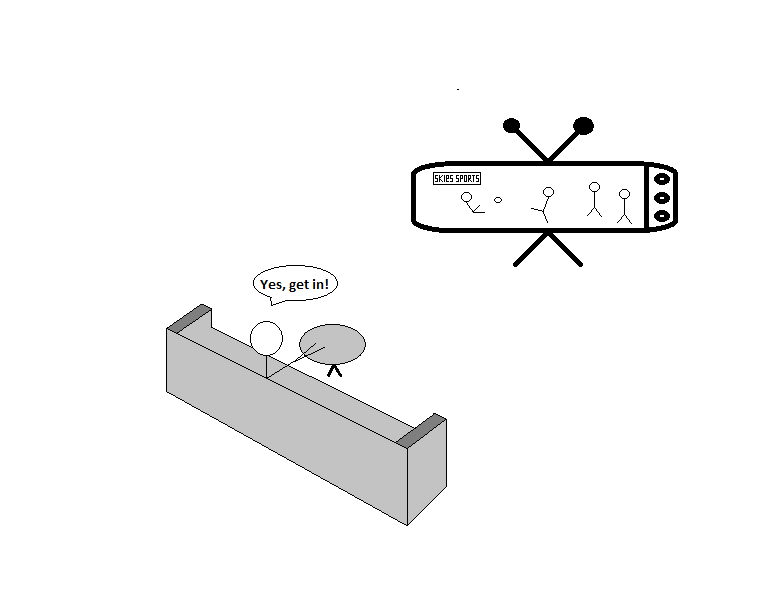
Like the operating theatre and disinfectant story, this shows how small changes can have a big impact. Over time, further incremental changes might be needed but overhauling a feature by making large incisions on how it is done might not be necessary even if our own knee-jerk reaction might be to discard it in its entirety and start again.
If you are thinking there was a burning need for intervention in both situations, you’re right. You may also think that as you have your own tasks working well, there is no need for closer scrutiny. To this end, we can’t agree as there are always ways to improve and attempt to extricate ourselves from the process, freeing us up to do more important tasks.
If you have ever looked at your working routine, you might have been able to assess which tasks are repetitive and rarely change, tasks which have some variability but are somewhat pattern forming, and tasks which are emergent and unpredictable. I decided a long time ago to map my daily routine over a series of weeks to try and see what I do and potentially why I do it. It turned out that many of the tasks were repetitive, meaning there was scope to try and automate processes, or at least make them quicker but equally as efficient.
Over the years, I have made considerable effort to make repetitive admin tasks not only better, faster, and more streamlined, but to minimise my contribution. If an admin task required four mouse clicks, I tried to reduce that to one click. Eventually, you want the mouse to click itself so you can jump in a hammock and chill out. After all, piña coladas won’t drink themselves, will they?
As a summer school Director of Studies, I could see how the entire process of placement testing new students and assigning them to relevant cohort groups took an inordinate amount of time. Leaving the testing process aside, the typical procedure from getting raw test data to printable student registers can take in excess of 8 hours. You have to:
- input data into a spreadsheet.
- analyse scores to generate an overall level.
- manipulate the data to assign student to classes.
- check if there are special considerations, dictating in which cohort group a student might be placed.
- make the data look presentable.
- export each group to a printable register.
All of this takes time but with a little expertise, you can fully automate points 2., 5., and 6.***, so they are performed with the click of a button. Point 3., can be automated up to about 70%. Points 1 and 4 have to be done manually. Here is a link to the tools I’ve created for this purpose: Class list toolkit
My point here is that by taking these actions, I’ve managed to get the process down from 8 hours to around an hour. Of course, these changes have been gradual; over time, I have had to learn how to manipulate and program spreadsheet to do these things. Shave off 20 minutes here, 30 minutes there… It all adds up. The precious time saved can be spent doing other meaningful things, such as in my case, actually looking at the teaching product and working with teachers to deliver it better. It might even allow you to get more down time to relax, as well, or… erm… be found in the pub talking codswallop.
This is an ongoing process, and one which requires us to revisit and reassess especially as the jobs we do change over time and our skill sets become better. What is clear is that being lazy takes a great deal of effort and if you fail to be lazy, as I seem to do every day, remember we are all fallible. We are not masters of laziness but mere students.
*Still work in progress.
** I wish I could say I thought of this quip myself, ‘Huh, I’m a very lazy man, don’t you know?…’ Alas, I didn’t, it comes from an old mucker of mine, Paul Brazill, writer and contrarian.
***Also, still work in progress.

Want to be lazy? Here are some handy labour-saving tools I’ve built which have made a real difference to my work. You might find something useful here: Office tools
Last year I wrote a blog post which posed this question, why do we do what we do? The answer to this question revolves around the fundamental idea that all actions should be rooted in an understanding that they are labour-saving or seek not to disrupt the structures we have in our working lives to generate more work unnecessarily. You can read it here: Maintaining the structure
 EFL Summer School
Very good points, what I see as the only hurdle is the attitutde- especially here in Poland- that overcomplication is its own reward. Martyrdom is very addictictive. Though Bill Gates once said “I choose a lazy person to do a hard job. Because a lazy person will find an easy way to do it.”
LikeLike