
Here’s an open letter to my 6-year-old nephew, Bertie. I sent him a postcard from the Forbidden City in Beijing with a link to this blog post written on the postcard. If he receives it, it will give him some fun themed activities he can access himself or with his class mates if his teacher thinks it might be relevant. I sent the postcard to him via his school.
This blog is part of a series on a similar theme. If you would like to read another blog post in this series, click here: A postcard from Qianmen Street and Wangfujing Street, Beijing.

***
Dear Bertie
I hope you and your friends are well. Winter has properly arrived here in Beijing. How’s the weather where you are?
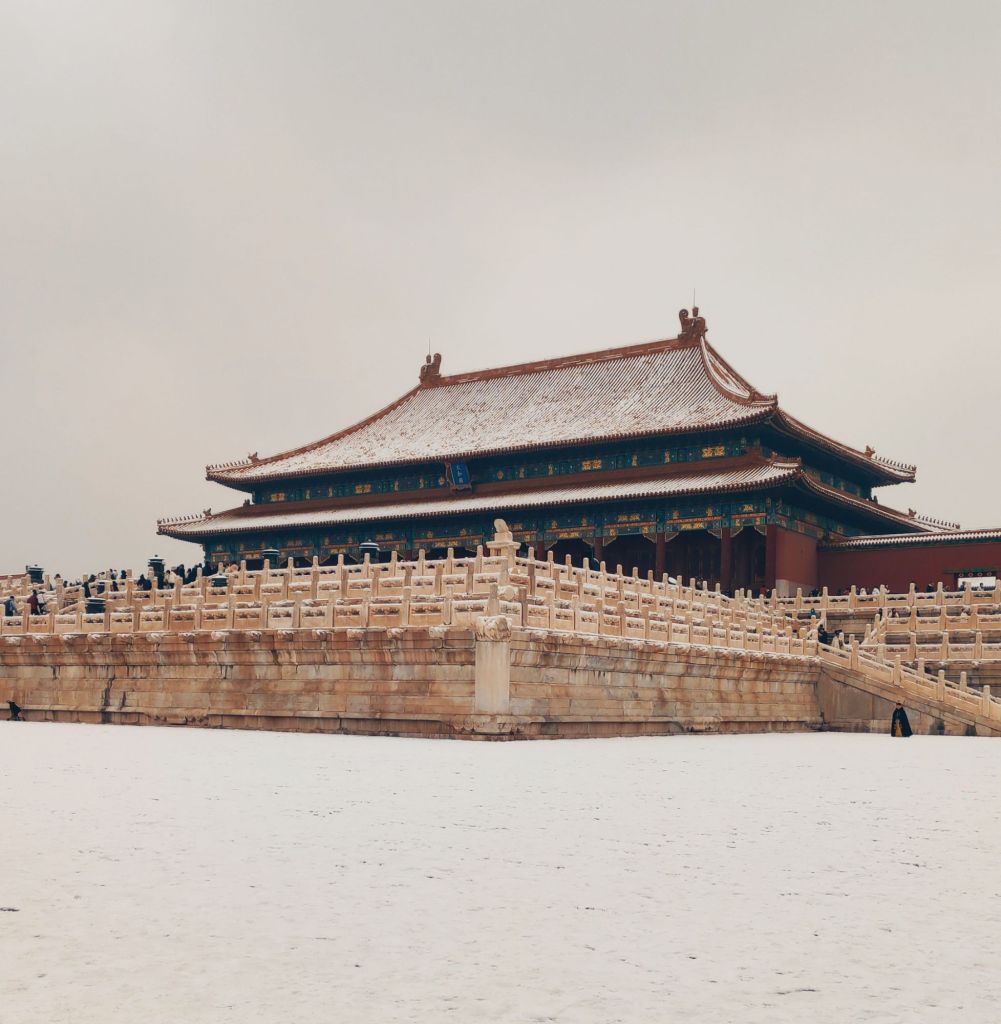
The other day, I went to the Forbidden City. Situated in the middle of Beijing, it was the home of Chinese emperors.
Before going, I needed to do some research about its history. It’s very big – 961 metres long and 753 metres wide – and as large as 100 football fields. Construction started on the site in 1406 during the Ming dynasty and took 14 years to complete. From 1420, it was the home of 24 emperors and the last emperor lived in the Forbidden City until 1924 when it became a museum. Just to put that in perspective, my grandmother, your great grandmother, was born in 1920. With that in mind, it doesn’t feel that long ago.

So why was it called the Forbidden City? Well, it was because nobody was allowed to enter or leave without permission of the emperor. If you wanted to get in, you needed permission; if you wanted to go out, you also needed permission. It was a city inside the city and required many people to live and work there, as many as 9000 people to be precise. Can you imagine living and working in a walled city?
With 980 buildings and over 9300 rooms, the Forbidden City is the largest palatial structure in the world and mostly made from wood! I wonder how many times they had to put out fires and rebuild some of the buildings? Anyway, here’s my video from the day:
Video link: https://youtu.be/U-PBf9ZT3-I?feature=shared
Are you impressed? I think you would have liked it.
After my visit, it got me thinking: are there other places in the world like the Forbidden City? It turns out there are! Here are few of the most famous:
At 1005 metres long and 850 metres wide, the Vatican is the smallest country in the world. It is completely surrounded by the city of Rome in Italy and has a population of less than 1000 people.
Monaco is the second-smallest country in the world. Sandwiched between France and the Mediterranean Sea, this tiny country is less than 5000 metres long – about 10 minutes driving in a car – and has a population of around 38,500 people.
Nauru, an island in the Pacific Ocean, is the third-smallest country in the world. From the top to the bottom, it’s less than 9000 metres – about a two hour walk – and has a population of around 10,000 people.
How would you like to live in a place like the Vatican, Monaco, or Nauru?
If you have time, why don’t you try and design your own Forbidden City. As we know, small countries do exist, so it is possible. If you are doing this activity at home, you may need some help.
Here’s a blank city template, click here to download it: My Forbidden City. You will have to ask someone to print it for you. I have added the city walls, a moat filled with water going around the city to help keep people out, four entry/exit points, a space to add your city’s name, and a place to draw your city’s flag.
Before you start, think about these ideas:
- Security: how will you make sure your city is safe?
- Housing: where will you live? What will your house look like?
- Housing: you will need people to help you in your city, where will they live?
- Shops: you will need a place to buy food. What other shops will you need?
- Entertainment: what will you and the people who live in your city do to relax? Do you need to build a cinema? How about a playground? Or, will you build something else?
- Green spaces: do you need a park?
- What else do you need to include in your town?
If you are doing this activity at home or with a friend, share your ideas before starting to draw your city. You might want to write a few things down to help you remember later.
Once you have your ideas, get drawing!
Finished? Tell someone about your city. Make sure to describe all the details and why you have chosen to add them.
Take care and I’ll send another postcard soon!
Uncle Oliver x

References:
https://en.m.wikipedia.org/wiki/Forbidden_City
https://www.travelchinaguide.com/cityguides/beijing/forbidden.htm
https://en.m.wikipedia.org/wiki/Vatican_City
https://en.m.wikipedia.org/wiki/Monaco
https://en.m.wikipedia.org/wiki/Nauru
Are you a teacher? If yes, you might be interested in these adaptable games and board games, including a language dominoes template: Games and board games
 EFL Summer School
[…] This blog is part of a series on a similar theme. If you would like to read another blog post in this series, click here: A postcard from the Forbidden City, Beijing. […]
LikeLike
[…] A postcard from the Forbidden City, Beijing […]
LikeLike
[…] A postcard from the Forbidden City, Beijing […]
LikeLike